
What Hurricane Lala Taught Hawaii Homeowners About Roof Inspections
Hurricane Lala left an important warning for Hawaii homeowners: a roof can look fine from the ground and still have damage that is difficult to see.
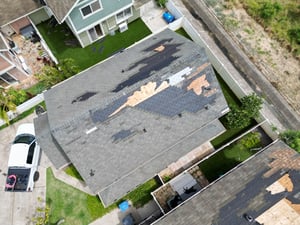
After the storm, Kapili inspected multiple Oahu homes with missing and lifted shingles, exposed underlayment, exposed wood sheathing, and leaks inside the home. At some properties, water intrusion caused ceiling stains, bubbling, separation, and even partial ceiling collapse.
The examples in this article come from multiple Oahu properties inspected after Hurricane Lala. They represent different homes and different levels of storm damage.
The main lesson is simple: a major storm should not be the first time you find out something is wrong with your roof.
What Kapili Found After Hurricane Lala
Strong winds affected each home differently. Across the properties Kapili inspected, the visible damage included:
- Missing or blown-off shingles
- Lifted, loosened, or displaced shingles
- Large sections of exposed underlayment
- Areas of exposed wood sheathing
- Damaged roof and flashing areas
- Openings where wind-driven rain could enter
- Interior leaks and water damage
Some of this damage was obvious during an aerial or professional roof inspection. However, it would have been difficult for a homeowner to see clearly or evaluate safely from the ground.
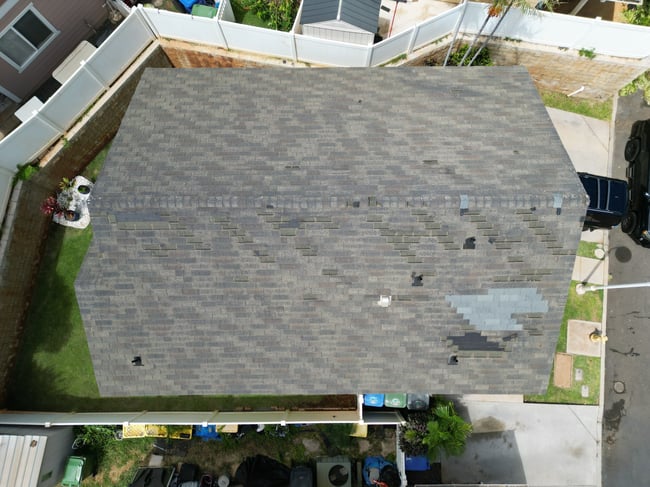
Aerial inspection showing widespread shingle loss and exposed roof materials at an Oahu home after Hurricane Lala.
Case Example 1: Shingles Were Blown Away
At one Oahu property, strong winds removed large sections of asphalt shingles. This left broad areas of underlayment and wood sheathing exposed.
Shingles form the roof’s first layer of protection against sun, wind, and rain. When shingles become lifted, damaged, or completely blown away, the materials underneath become more vulnerable to moisture.
If rain reaches an exposed or damaged area, water may enter the roof system and eventually appear inside the home.
Missing shingles are not only a cosmetic concern. Even if the home is not leaking yet, exposed roofing materials should be professionally evaluated as soon as possible.
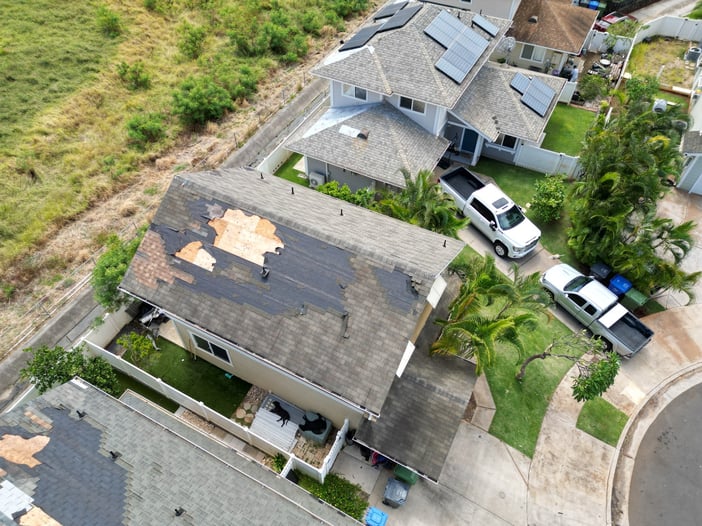
Wind removed sections of shingles and exposed the underlayment and wood sheathing below.
Case Example 2: Water Stains and Bubbling Ceilings
At other Oahu homes, the first noticeable warning signs appeared inside.
Kapili documented water stains, ceiling discoloration, bubbling material, and sections beginning to separate. These signs indicated that moisture had already entered the home.
A ceiling stain may appear small, but it can mean that water has traveled through part of the roof or building structure. The visible stain may not be directly below the damaged roof area because water can move along framing and other materials before appearing inside.
Homeowners should not puncture a bubbling ceiling or climb into an unsafe area to investigate. Keep people and belongings away from the affected section, especially if the ceiling is sagging, water is near an electrical fixture, or materials appear ready to fall.
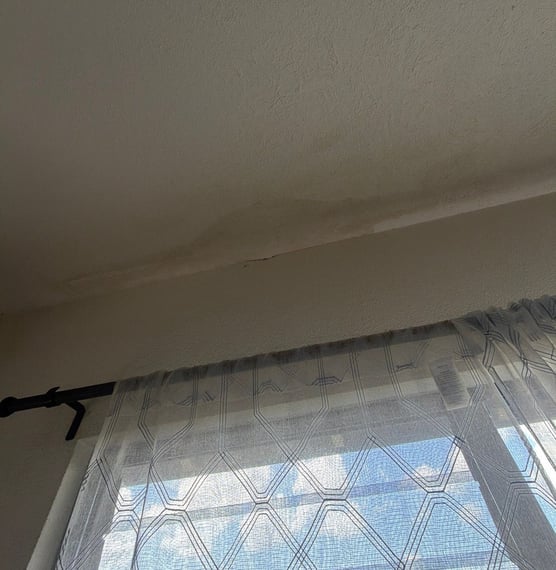
Interior water staining can be a visible sign that rain has entered through a damaged roof area.
Case Example 3: Partial Ceiling Collapse
At another property, the interior damage had progressed beyond staining and bubbling. Part of the ceiling had collapsed, exposing the framing above.
When ceiling material absorbs enough water, it can weaken, sag, separate, and eventually fall. This turns a roof leak into a potential safety concern inside the home.
If a ceiling appears swollen, cracked, separated, or unstable, stay away from the affected area and contact a qualified professional. Do not attempt to inspect the roof yourself, especially during or immediately after severe weather.
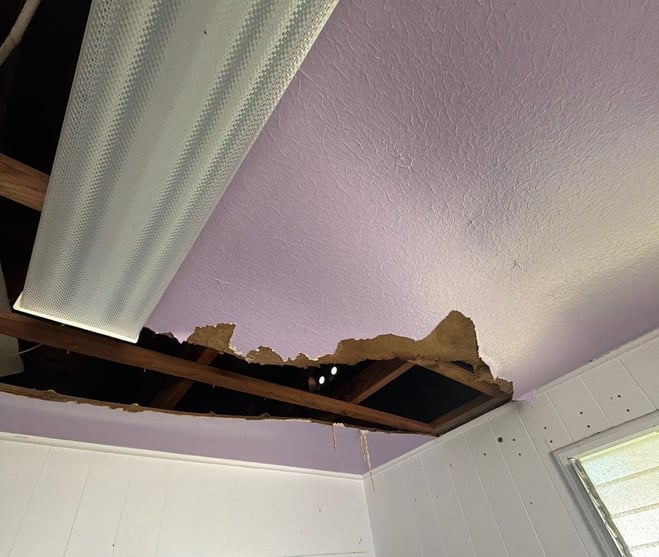
A partially collapsed ceiling at a separate Oahu property illustrates the potential severity of continued water intrusion.
Emergency Tarping After Storm Damage
At one of the damaged properties, Kapili installed an emergency tarp over the affected roof area.
Emergency tarping is a temporary protective measure intended to help limit additional exposure while the roof is evaluated and the homeowner determines the next steps.
A tarp is not a permanent roof repair. The roof still needs to be professionally assessed, and permanent repair or replacement may be necessary depending on the condition of the roofing system.
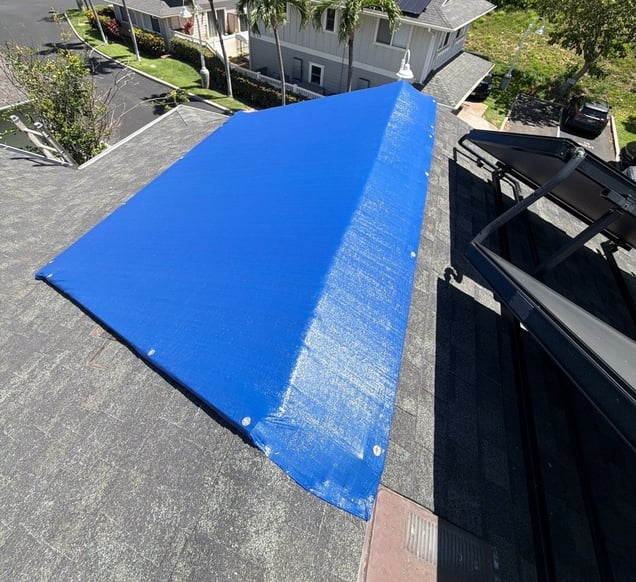
An emergency tarp was installed to temporarily protect a storm-damaged section of roof.
Why Roof Damage Can Be Difficult to See From the Ground
From the driveway or yard, a roof may appear normal even when individual shingles are lifted, loosened, damaged, or missing.
Damage may also occur around ridges, roof penetrations, vents, transitions, and flashing areas that cannot be seen clearly from below.
That is why homeowners should not rely only on what the roof looks like from the ground.
Do not climb onto the roof to inspect it yourself. Roof surfaces can be slippery or unstable after strong winds and heavy rain. A professional inspection provides a closer and safer assessment of accessible roof areas.
A roof inspection cannot prevent storm damage or guarantee that a roof will survive a hurricane. However, it may identify visible concerns earlier, document the roof’s current condition, and help homeowners understand whether maintenance, repair, monitoring, or further evaluation is needed.
How Often Should You Have Your Roof Inspected?
As a practical maintenance guideline, Hawaii homeowners should consider scheduling a professional roof inspection:
- At least once a year
- After a hurricane, major storm, or severe wind event
- When shingles or roofing debris are found around the property
- When new water stains, bubbling, dampness, or leaks appear inside
- Before hurricane season if the roof has not been inspected recently
- After work involving solar panels, vents, skylights, or other roof penetrations
The appropriate inspection schedule may vary depending on the roof’s age, material, condition, exposure, and maintenance history.
What Should You Do After a Major Storm?
1. Check your property safely from the ground
Look for shingles or roofing debris in the yard, visibly missing materials, damaged gutters, or other noticeable changes. Do not climb onto the roof.
2. Check inside your home
Look for active dripping, new water stains, bubbling paint, damp areas, sagging ceilings, or unusual odors. Keep away from ceilings that appear unstable. Use extra caution if water is near electrical fixtures.
3. Take photos and videos
Document visible exterior and interior damage when it is safe to do so. Record the date and keep copies of the original files. Do not enter an unsafe area simply to take a photo.
4. Review your insurance policy
Read your policy so you understand your coverage, exclusions, deductible, reporting deadlines, and documentation requirements. Insurance coverage varies. A roof inspection or estimate does not guarantee that an insurance company will approve or pay a claim.
5. Schedule a professional roof inspection
A professional can evaluate accessible roof areas, document visible damage, recommend temporary protection when appropriate, and explain potential next steps.
6. Keep your records organized
Save your inspection photos, estimates, invoices, insurance documents, claim information, and correspondence. Organized records can make it easier to communicate with your insurance provider and contractors.
What Hurricane Lala Taught Us
The damage found after Hurricane Lala did not look the same at every home.
Some properties had obvious shingle loss and exposed roof materials. Others showed the consequences inside through water stains, bubbling ceilings, separated materials, and partial ceiling collapse.
The common lesson is that a roof can look fine from the ground without actually being fine.
Routine inspections can help identify visible concerns before the next major storm. Post-storm inspections can help document new damage and determine whether temporary protection, monitoring, repair, or replacement may be necessary.
You do not need to wait until water enters your home before having your roof checked.
Frequently Asked Questions
-
Should I have my roof inspected even if I do not see a leak?
Yes. A roof may have missing, lifted, loosened, or damaged materials without causing an immediate visible leak. A professional inspection can identify visible concerns that may be difficult to see from the ground.
-
How soon after a storm should I schedule an inspection?
Schedule an inspection as soon as it is safe and practical, especially if you see missing shingles, find roofing debris around your property, or notice interior water damage.
-
Does a roof inspection guarantee insurance coverage?
No. An inspection can help document visible conditions and damage, but insurance coverage is determined by the insurance company according to the homeowner’s policy.
-
Is an emergency tarp a permanent roof repair?
No. Emergency tarping provides temporary protection. The roof still needs to be evaluated, and permanent work may be required.
-
How often should a roof be inspected in Hawaii?
As a general maintenance guideline, consider scheduling a professional inspection at least once a year and after major storms or severe wind events. The best schedule will depend on your roof’s material, age, condition, and exposure.
Schedule Your Free Roof Inspection and Estimate
If your roof has not been inspected recently—or if your property experienced strong winds or heavy rain—Kapili can help evaluate its condition and document visible concerns.
Call Kapili Roofing at 808-621-7663 to schedule your free roof inspection and estimate.
Visit kapiliroof.com to learn more.
Inspection findings and recommendations vary by property. Insurance coverage is determined by the applicable policy and insurance provider. Kapili does not guarantee insurance claim approval or payment.
