
How to Tell the Difference Between a Roof Leak and Severe Weather Intrusion
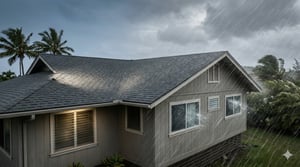
In Hawai‘i, Kona Low storms bring a unique combination of heavy rainfall and strong, shifting winds. During these events, homeowners may notice water entering their homes and immediately assume the roof has failed.
But in many cases, the situation is more nuanced.
This guide will help you understand how wind-driven rain works, where intrusion can occur, and how to identify whether the issue is truly a roof problem—or something else.
What Is Wind-Driven Rain?
Wind-driven rain occurs when strong winds push rainwater horizontally—or even upward—into areas of the home that are normally protected.
Kona Low systems are especially known for this because they often bring:
- Unusual wind directions (commonly from the south)
- Sustained, heavy rainfall
- Wind speeds strong enough to force water into small openings
Unlike typical rain that falls downward, this type of weather can test parts of your home that aren’t usually exposed to direct water intrusion.
Common Areas Where Water Intrusion Can Occur
A home is made up of multiple systems—roofing, walls, windows, and ventilation—all working together. While your roof is designed to shed water, other components are built for airflow or function, not complete waterproofing.
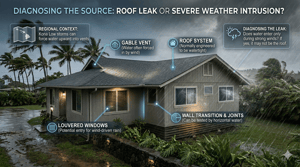
During extreme weather, water may enter through:
- Curb-mounted skylights
- Dryer and kitchen exhaust vents
- Gable vents and solar attic fans
- Jalousie (louvered) windows
- Gas appliance vents
- Window frames and trim
- Siding joints and wall transitions
These components are essential, but they are not designed to be sealed the same way a roofing system is.
How Roofing Systems Are Designed to Perform
Modern roofing systems are engineered to remain watertight under normal and expected weather conditions.
This includes:
- Properly installed materials and flashings to prevent water entry
- Sealed penetrations and transitions
- Components tested to resist wind-driven rain within defined limits
Many systems also come with manufacturer-backed warranties covering material performance.
However, it’s important to understand that every system has limits, especially during extreme weather events like Kona Lows.
Roof Leak vs. Wind-Driven Intrusion: How to Tell the Difference
One of the most reliable ways to identify the source of a leak is to observe how your home performs across different storms.
Real-World Example:
- Storm 1: Heavy rain + strong winds → Water intrusion occurs
- Storm 2: Heavy rain + mild winds → No intrusion
What This Indicates:
If water only enters during high wind conditions, it’s often a sign that:
👉 Water is being forced into vents, windows, or wall systems
👉 The roofing system may still be performing properly
On the other hand, if leaks occur during normal rainfall (with little to no wind), that may point more directly to a roofing issue.
How to Approach a Leak the Right Way
When water intrusion happens, it’s important not to jump to conclusions.
A proper evaluation should include:
- Inspection of the roofing system (flashings, penetrations, materials)
- Review of storm conditions (wind direction, intensity, rainfall)
- Comparison across multiple weather events
- Assessment of adjacent systems like windows, vents, and siding
This approach helps ensure the true source is identified—rather than assuming the roof is at fault.
Why This Matters for Homeowners
Misidentifying the source of a leak can lead to:
- Unnecessary roof repairs or replacements
- Ongoing issues that never get resolved
- Wasted time and money
Understanding how wind-driven rain works allows you to make better, more informed decisions about your home.
Final Thoughts
Not all leaks originate from the roof.
During extreme Kona Low storms, even well-performing homes can experience water intrusion due to the way wind and rain interact with different building components.
The key is to approach the situation with:
- Careful evaluation
- A full understanding of how your home performs
- A focus on identifying the true cause
If you’ve experienced water intrusion during a recent storm, getting a professional assessment can help clarify what’s really going on—and what steps, if any, should be taken next.
